1. During renovation, a complete mechanical rearrangement rarely fits in: you wouldn't want to break down walls, disturb ceilings, or see ducts. Nevertheless, the demand for continuous fresh air, lower heating and cooling loads, and draft-free, even comfort is justified. 2. The heat recovery ventilation system 3. solves this dilemma: it recovers the heat content of the outgoing air and transfers it to the incoming fresh air, so you are not „heating the street,” while stale air, humidity peaks, and unpleasant odors are eliminated. The good news is that you don't have to give it up during renovation: among the solutions available on the market, there are options that 4. can be installed 5. (or with minimal intervention) without demolition, and there are also those that provide premium comfort for the entire apartment with larger-scale modifications. If you want a comprehensive picture of the technology and everyday use, it is worth reading the 6. Vents.hu 7. articles; the latest guides and case studies can be found on the 8. blog collection page. 9. The decision hinges on three fundamental questions. First:.
10. what level of intervention fits 11. into the renovation now? Second: 12. how many rooms' air would you like to handle at once 13. – just the bedrooms and the living room, or the entire apartment including the wet rooms? Third: 14. how important is scalability 15. – would you start with smaller steps and expand later, or would you solve it all at once, permanently now? The answers will determine whether a decentralized or centralized solution will be the winning direction for you. 16. Renovation smartly.
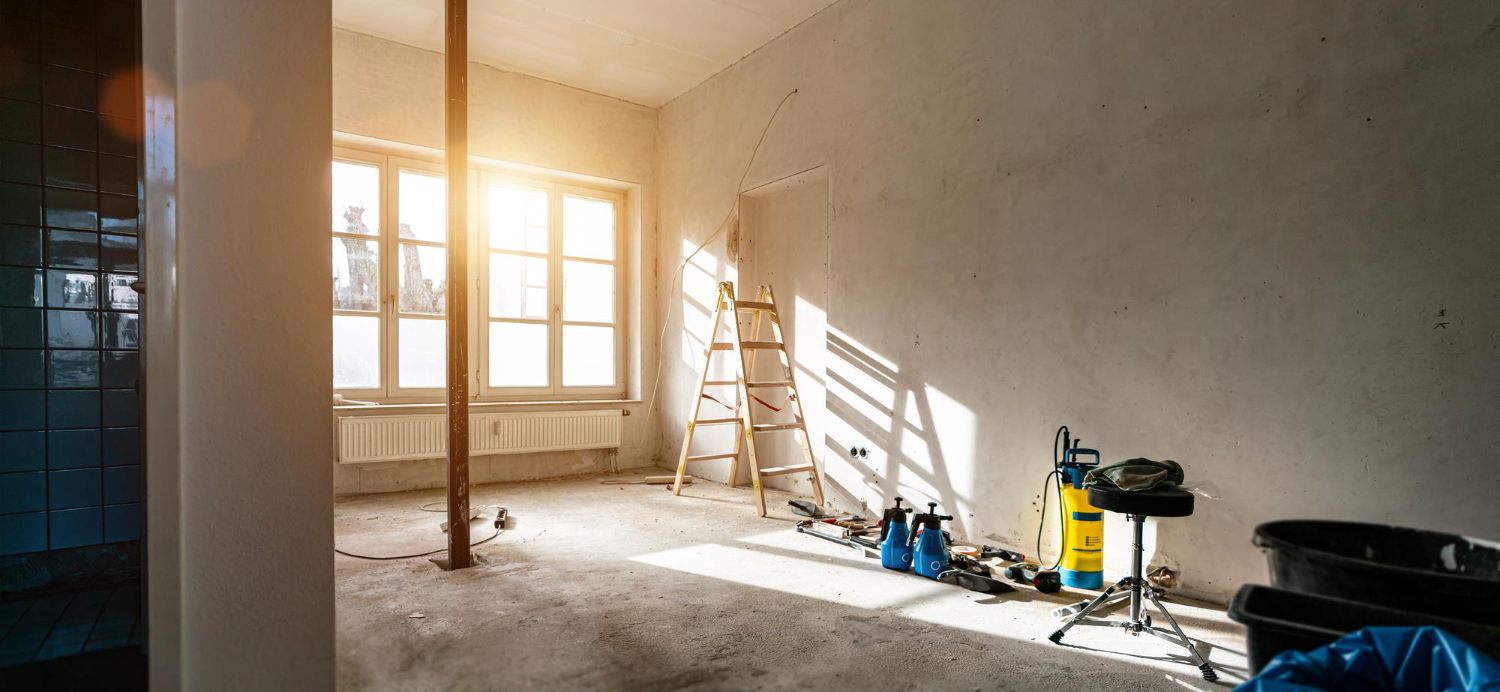
During renovation: decentralized vs. central – which heat recovery ventilation system suits your apartment?
A decentralized, single-room HRVThe essence of -s is that through wall breakthrough the heat recovery air exchange is solved in the given room – there is no need for ductwork. This immediately reduces internal demolition: there is no need to build a false ceiling, move furniture, or lift flooring. The installation typically consists of a wall breakthrough, electrical connection, and the careful installation of external and internal grilles. They provide the greatest added value typically in bedrooms, offices, children's rooms, and living areas: the head feels fresher in the morning, sleep is better at night, and the „stale air” feeling disappears. Another advantage is that it is easy to zone: the device should be placed where you actually spend time and where the comfort criteria are the strictest.
On the sides of the limits, it is worth considering that these devices work room by room, so if you want to cover multiple rooms in a larger apartment, more units may be needed. The facade appearance should also be considered: although there are aesthetic external grilles and hidden solutions, it is advisable to plan the location of the openings in advance to provide a uniform appearance on the facade. Finally, regarding the sound comfort, modern, EC motor single-room HRVs are quiet at low speeds, but proper installation and consideration of manufacturer noise data are important, especially in bedrooms.
Those who are looking for a quick, demolition-free development and want to improve the air quality of the most critical spaces as a first step often benefit the most from this. Later – if the life situation and budget allow – the initiated zoning can be expanded.: additional rooms will receive their own HRV, or in the long term, one can consider switching to a central system.
A central, ducted HRV in contrast the entire apartment serves: with hidden machinery, discreet supply and exhaust elements, unified control. In terms of comfort, this is the ceiling: draft-free supply, quiet operation, precise regulation, demand-controlled (CO₂/humidity-based) operation. During renovation, the installation conditions must also be considered. It is ideal if there is a false ceiling, attic space, or mechanical section where the flat duct and the machine unit can fit, and the pathways remain short. Experience shows that in many apartments, smart piping tricks (e.g., hallway false ceiling, passage above the wardrobe, hidden routing behind built-in furniture) can make the central system feasible without significant demolition – especially if you involve the designer at the beginning of the renovation and coordinate the mechanical pathways with the carpentry and electrical work. The reward is a unified, scalable system, which is safe for the long term and keeps the air quality of the entire home in one hand, noiselessly.
Decentralized solution
Quick comfort improvement with minimal intervention
The single-room, decentralized heat recovery units.
- no false ceiling or duct network
- easy zoning room by room
- quiet operation at low speed
- expandable system later
Cost brackets and financial planning: prices for heat recovery ventilation systems during renovation
Generally during renovation from the budget you manage, so it is important to see the financial difference between the two directions. The decentralized solutions typically have a lower entry cost: one device and its installation cover the needs of the most critical spaces, and this already achieves a noticeable improvement in comfort. Here, one component of the return is that less window opening keeps the air fresh, meaning heating and cooling losses are reduced; the other component is that the system operates where you are currently located. The operating costs are mostly related to filter replacement and periodic cleaning; this type of maintenance is simple, predictable, and ensures quiet, efficient operation in the long term.
A central HRV investment is higher because alongside the machine a duct network must also be built. In return, you will have a uniform, invisible system, with low specific noise, precise regulation, and advanced control. The greatest advantage in terms of return is the 1. heat recovery 2. constant presence throughout the entire apartment: the system continuously exchanges air while minimizing heat loss, thus comfort is not compromised. An important financial item is the 3. control 4. as well: the CO₂ and humidity sensor-based, presence-based operation eliminates unnecessary running, meaning the system does not „run” in an empty apartment – from this 5. there will be real, monthly 6. cost reduction. Maintenance here mainly involves filter replacement and periodic inspection: the accessible filters of modern units allow for quick servicing.
7. The key to realistic returns is that 8. you tailor the system to your modern technologies 9. living area. If you spend a lot of time at home, work from home, or have an allergy sufferer in the family, the value of continuous, filtered fresh air is multiplied. If the apartment is more segmented, and you want to develop gradually, start with the most important rooms 10. units, and see how daily comfort changes; you can expand later. If you are looking for a long-term, "once and for all" solution, and there is an opportunity for decentralized 11. hidden piping 12. the most comfortable and future-proof direction., a central HRV 13. A short, practical set of criteria can help you through the decision:.
14. – How much internal demolition can be accommodated now (false ceiling, furnishing, attic space)? – Which rooms are the most critical (bedroom, children's room, living room, office)? – How high is the priority of
15. noise comfort 16. draft-free blowing and the 17. ? – Is18. smart, demand-driven 19. control (CO₂/humidity, presence) necessary? – Do you want to expand later, or does the final system need to be in place now? control (CO₂/steam, presence)? – Do you want to expand later, or do you need the final system now?
Central system
Unified comfort throughout the apartment
The ducted, central HRV system serves the entire apartment with hidden mechanics and unified control. It can also be implemented during renovations if the pathways are planned in advance.
- Draft-free air supply in every room
- Demand control based on CO₂ and humidity
- Low noise level and precise regulation
- Future-proof, long-term solution
Ventilation can be smart even without demolition
It can also be implemented during renovations 2. The heat recovery ventilation system: the decentralized solutions allow you to start quickly with minimal intervention, the central system provides a unified, invisible, and extremely comfortable solution. The key is to tailor the technology to your goals and the characteristics of the apartment: this way, fresh air, energy efficiency, and silence become not a promise, but a daily experience.
Request a personalized recommendation!
Write down the floor area, where the critical rooms are, and how much demolition can be accommodated. We will help you choose the heat recovery ventilation system, that can realistically achieve quiet, energy-efficient, healthy ventilation even during renovations.
Quick decision-making list
What to pay attention to during renovations
Choosing the right system is not only a technical issue but also a lifestyle question. It is worth considering in advance what can be accommodated now and what will be important in the long term.
- how much demolition fits into the renovation
- which rooms are the most critical
- noise comfort and draft-free air supply requirements
- necessity of demand-driven automation
- future expandability or final solution